Vinegar is a constant presence in the kitchen and in everyday household routines. In addition to seasoning salads and a variety of dishes, it is also widely used for cleaning around the home.
Natural, affordable and easy to find, it is often seen as a practical alternative to traditional chemical products.
But can it replace conventional disinfectants? Experts say the answer is more complex than it may seem.
+ Complete guide: compare the 10 most popular types of milk
+ 10 foods to improve your skin: complete list with benefits and how to consume
Is Vinegar Really a Disinfectant?
According to infectious diseases specialist Alan Taege, MD, of the Cleveland Clinic, vinegar does have disinfectant activity. This is because it contains acetic acid, a substance capable of destroying certain bacteria and viruses. However, the specialist emphasises that many commercial disinfectants are more effective.
Scientific studies indicate that vinegar may have antimicrobial action, particularly in food preparation. Research suggests that acetic acid solutions can reduce the presence of bacteria such as Salmonella when applied for at least 15 minutes.
Another study showed that vinegar with a 6% concentration demonstrated antimicrobial activity against Staphylococcus aureus and Escherichia coli, although it was less effective than conventional disinfectants. In this case, a minimum exposure time of 30 minutes was required to observe significant results.
Additional research found that 6% acetic acid was able to eliminate the bacterium Mycobacterium tuberculosis after 30 minutes of contact. A paper published in 2010 also suggested that 10% malt vinegar may have an effect against the influenza virus.
Despite these promising findings, experts stress that further research is needed to determine which types of vinegar and which concentrations are truly effective against a broad range of microorganisms.
What Health Authorities Say
It is important to note that vinegar is not included on the list of certified disinfectants by the United States Environmental Protection Agency (EPA). For this reason, it is not recommended as an official substitute for disinfecting critical surfaces, cleaning wounds or treating infections.
In a domestic context, its use may be considered complementary, particularly for washing foods, but it does not replace products specifically formulated to eliminate germs on surfaces.
Which Type of Vinegar Would Be Most Effective?
According to specialists, white vinegar is the most suitable option if used for disinfectant purposes. This is because its acetic acid concentration typically ranges from 4% to 7%, making it slightly more acidic than versions such as apple cider or wine vinegar, which generally range between 5% and 6%.
Still, this does not mean other types are entirely ineffective, but their action may be weaker depending on concentration.
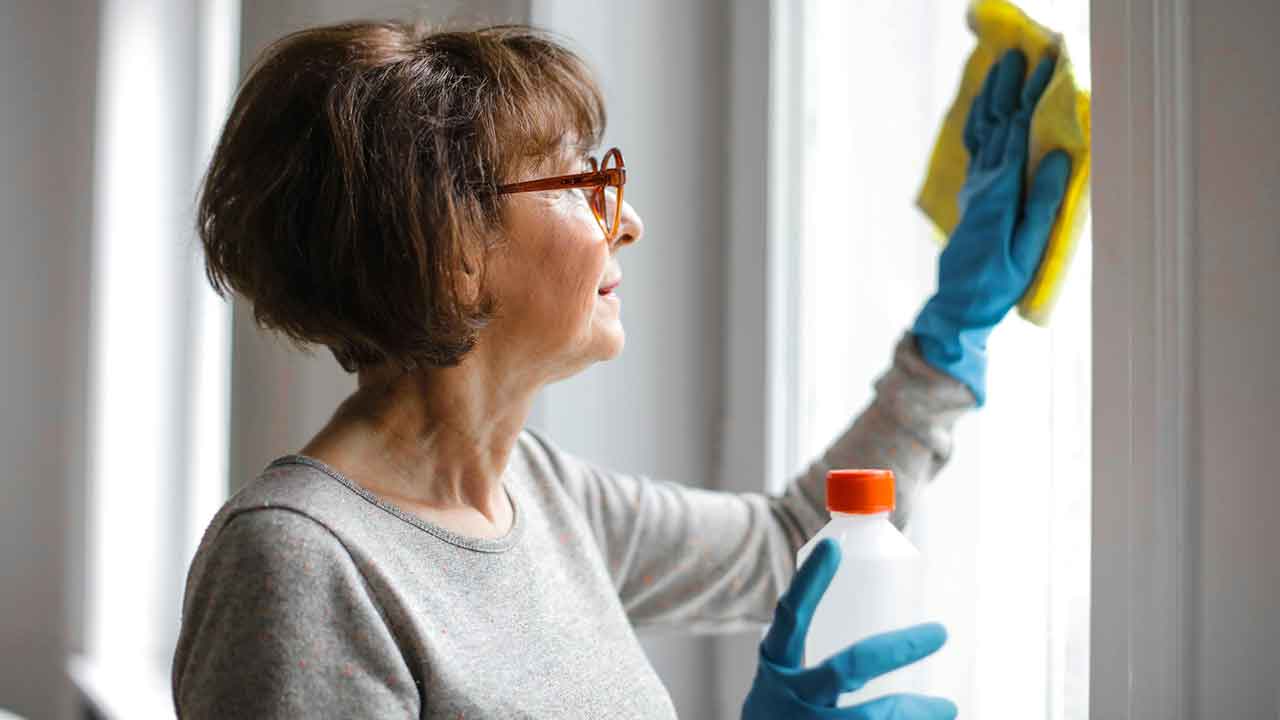
If preparing a homemade solution is necessary, the National Sanitation Foundation (NSF) recommends a 1:1 dilution (vinegar and water). The solution can be used on surfaces such as glass, windows, walls, cupboards, floors, sinks, hobs and coffee machines.
On the other hand, vinegar should not be applied to natural stone, waxed wood, cast iron or aluminium.
It is also not recommended for high-risk food contamination surfaces, such as chopping boards or refrigerator shelves. In these cases, the NSF recommends using a bleach solution.
Another important warning: never mix vinegar with bleach or hydrogen peroxide, as the combination can release toxic vapours.
Which Disinfectants Are More Recommended?
According to studies and recommendations from the Centres for Disease Control and Prevention (CDC), diluted bleach solutions and products containing at least 70% alcohol are effective against various viruses and bacteria.
Commercial disinfectants specifically formulated to eliminate microorganisms remain the safest and most reliable option for sanitising household surfaces.
In summary, although vinegar does show some antimicrobial activity, it should not be considered a complete substitute for traditional disinfectants, particularly in situations requiring a high level of hygiene control.
Photo: Pexels