

More than genetics, the appearance of the skin is also linked to daily habits, diet and the active ingredients used in facial care. Vitamins such as A, B3, B5 and C are among the nutrients most associated with hydration, firmness, even tone and skin renewal.
Maintaining skin with a healthy appearance does not depend only on genetic factors. What is consumed daily, hydration, sun exposure and the products applied to the face can influence aspects such as texture, oiliness, elasticity, visible pores, blackheads, pimples, expression lines and sagging.
According to dermatocosmetics specialist Fernanda Chauvin, CEO of Ellementti Dermocosméticos, some vitamins play an important role in maintaining the skin, especially when combined with a balanced care routine. Among the best-known active ingredients are vitamins A, B3, B5 and C, as well as hyaluronic acid, widely used for its moisturizing action.
“Essential vitamins for the health and beauty of the skin are A, B3, B5 and C. These are active ingredients well established in dermatology. We can also include hyaluronic acid, as it is essential for hydration,” says Fernanda.
Many of these nutrients can be obtained through food, but in some cases the topical use of cosmetic products can complement skincare, especially when recommended by a professional.
Vitamin A
Vitamin A is known for its renewing action and for helping improve the appearance of signs linked to skin aging. It contributes to cell renewal, helps even out texture and may support firmness and elasticity.
According to the specialist, this nutrient may also help improve skin sagging, as it participates in processes related to collagen quality and the maintenance of skin hydration.
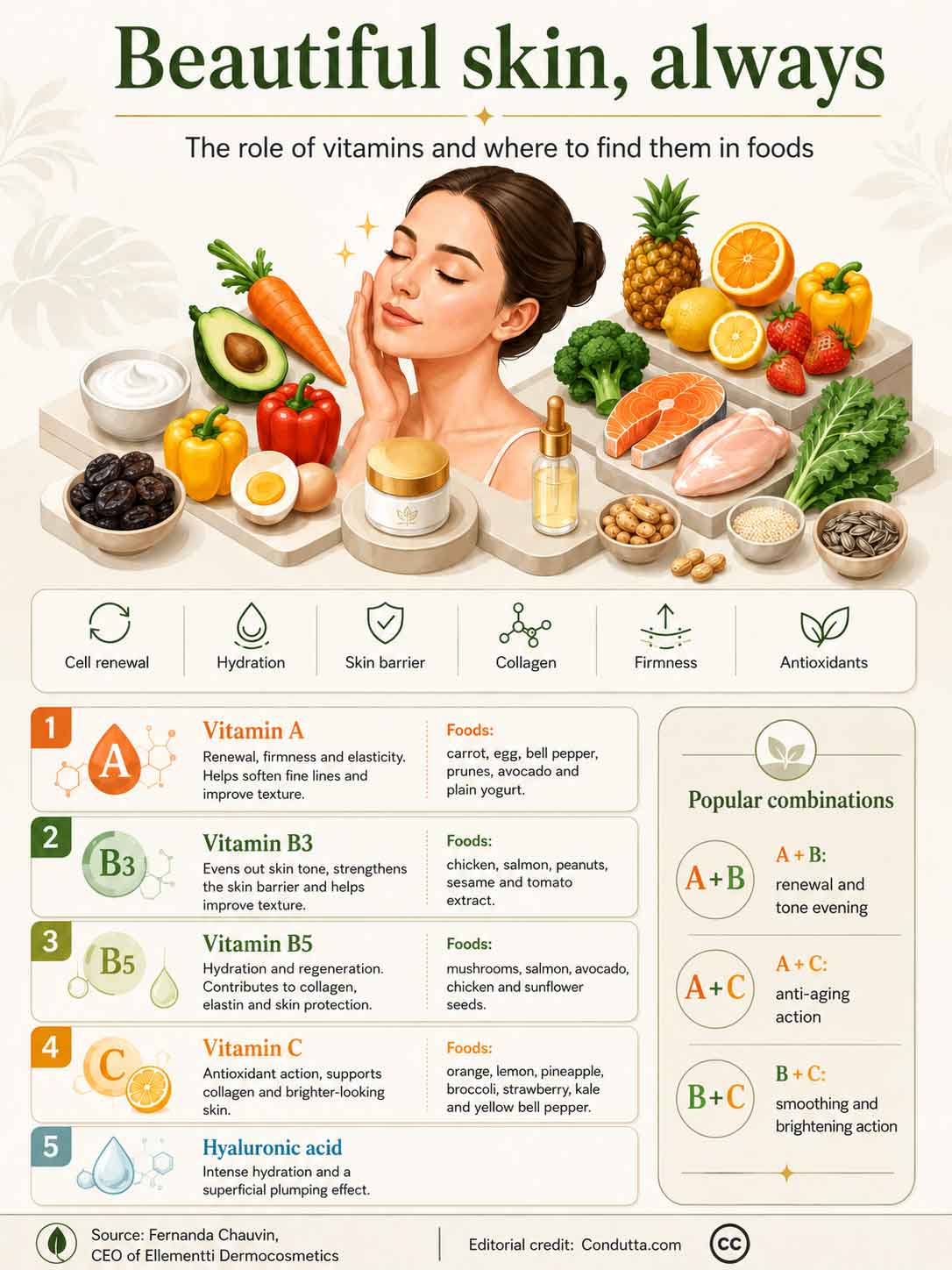
Foods rich in vitamin A include carrots, boiled eggs, bell peppers, prunes, avocado and plain yogurt.
Vitamin B3
Vitamin B3, also known in its cosmetic form as niacinamide, is widely used in products aimed at evening out skin tone. It helps strengthen the barrier function, reducing water loss and contributing to the maintenance of the hydrolipidic mantle.
In addition, vitamin B3 may help improve texture, control oiliness and care for acne-prone skin, always according to each person’s individual needs.
Dietary sources of vitamin B3 include cooked chicken, cooked salmon, peanuts, sesame seeds and tomato paste.
Vitamin B5
Vitamin B5, or pantothenic acid, also appears in the cosmetics industry through D-Panthenol, a provitamin widely used in moisturizing and repairing formulas.
According to Fernanda, D-Panthenol helps attract and retain moisture in the skin, as well as contributing to regeneration processes. When it comes into contact with the skin, it is absorbed and converted into vitamin B5, taking part in important reactions for cellular function.
This nutrient is also linked to the skin’s hydrolipidic barrier and to processes that support the formation of collagen and elastin, proteins associated with firmness and elasticity.
Foods rich in vitamin B5 include mushrooms, salmon, avocado, chicken and sunflower seeds.
Vitamin C
Vitamin C is one of the most popular active ingredients in skincare because of its antioxidant action. It helps protect against the effects of free radicals, participates in collagen synthesis and may contribute to skin with a more even, firm and luminous appearance.
The specialist also highlights that vitamin C is widely used in care aimed at softening fine lines and evening out skin tone. Hyaluronic acid, meanwhile, acts mainly on hydration and on a superficial plumping effect.
Foods rich in vitamin C include oranges, lemon juice, pineapple, broccoli, strawberries, parsley, cashew fruit, kale and yellow bell pepper.
Can vitamins be combined?
Fernanda explains that some vitamin serums can be used together, depending on the goal of the skincare routine. For intense renewal and evening of the skin, one option may be to combine vitamins A and B. For a more powerful anti-aging action, the association between vitamins A and C is often recommended. For a depigmenting action and texture improvement, the combination of vitamins B and C may be considered.
Despite the benefits, it is best to seek guidance from a dermatologist before starting the use of more concentrated active ingredients, especially in cases of sensitive skin, persistent acne, dark spots or the use of acids in the routine.