

Frequent use of headphones at high volume and constant exposure to noisy environments are among the habits that most concern specialists when it comes to hearing health.
A common habit in the routine of millions of people may be creating a silent risk to health: listening to loud music for long periods, especially with headphones, and spending time in environments with intense sound. According to a large study published in the British Medical Journal, around 1 billion young people aged 12 to 34 worldwide are at risk of hearing loss due to so-called unsafe listening practices.
The research reviewed studies carried out between 2000 and 2021, gathering data from nearly 20,000 people. The review assessed both the use of personal listening devices, such as headphones, and exposure to places with very loud sound, including parties, concerts and nightclubs.
The results are striking. According to the authors, 24% of the young people analyzed had used personal audio devices in an unsafe way, while almost half reported attending noisy environments at levels considered concerning. Based on these data, researchers made a global estimate of risk.
According to otolaryngologist Paulo Henrique Dias Mattos, from Hospital Israelita Albert Einstein in Goiânia, the study reinforces something specialists already observe in practice: the risk to hearing is directly linked to volume, duration and frequency of noise exposure.
The limit considered safe to avoid damage is 80 decibels for up to 40 hours per week. Above that level, exposure time should be reduced. The problem is that many headphones can reach around 105 decibels, while sound at parties and concerts can range from 104 to 112 decibels.
In addition, specialists warn that this exposure does not happen in isolation. In everyday life, so-called noise pollution also contributes to overloading the auditory system, making the situation even more worrying over the years.
Damage can be permanent
Excessive noise can cause sensorineural damage, affecting the auditory nerve. In many cases, the damage builds up over time, even when exposure seems occasional. In most situations, noise-induced hearing loss is permanent.
For this reason, the focus should be on prevention and on avoiding the progression of the problem. If a person already has some degree of hearing impairment at a young age, the effects may become more intense with aging.
Signs that may indicate hearing loss
One of the most delicate points is that, in many cases, people do not realize they are hearing less. Some warning signs include:
- frequently needing to ask people to repeat what they said
- often turning up the volume on the TV, phone or headphones
- constant or recurring ringing in the ears
- difficulty understanding conversations in noisy environments
- feeling tired when trying to follow conversations
In children, hearing loss can affect school performance. In adults, it may be associated with cognitive difficulties, psychosocial impacts and even reduced income, according to the study.
How to protect your hearing every day
The good news is that many risk factors can be changed. Among the most recommended measures are keeping headphones properly fitted, using a lower volume and taking breaks during prolonged use.
At concerts, parties and events, the recommendation is to avoid staying too close to speakers. In very noisy places, such as industrial environments, it is essential to use hearing protection, such as earplugs or earmuffs.
Small changes in daily habits can make an important difference in the future. After all, taking care of hearing from an early age can help preserve quality of life for many years.
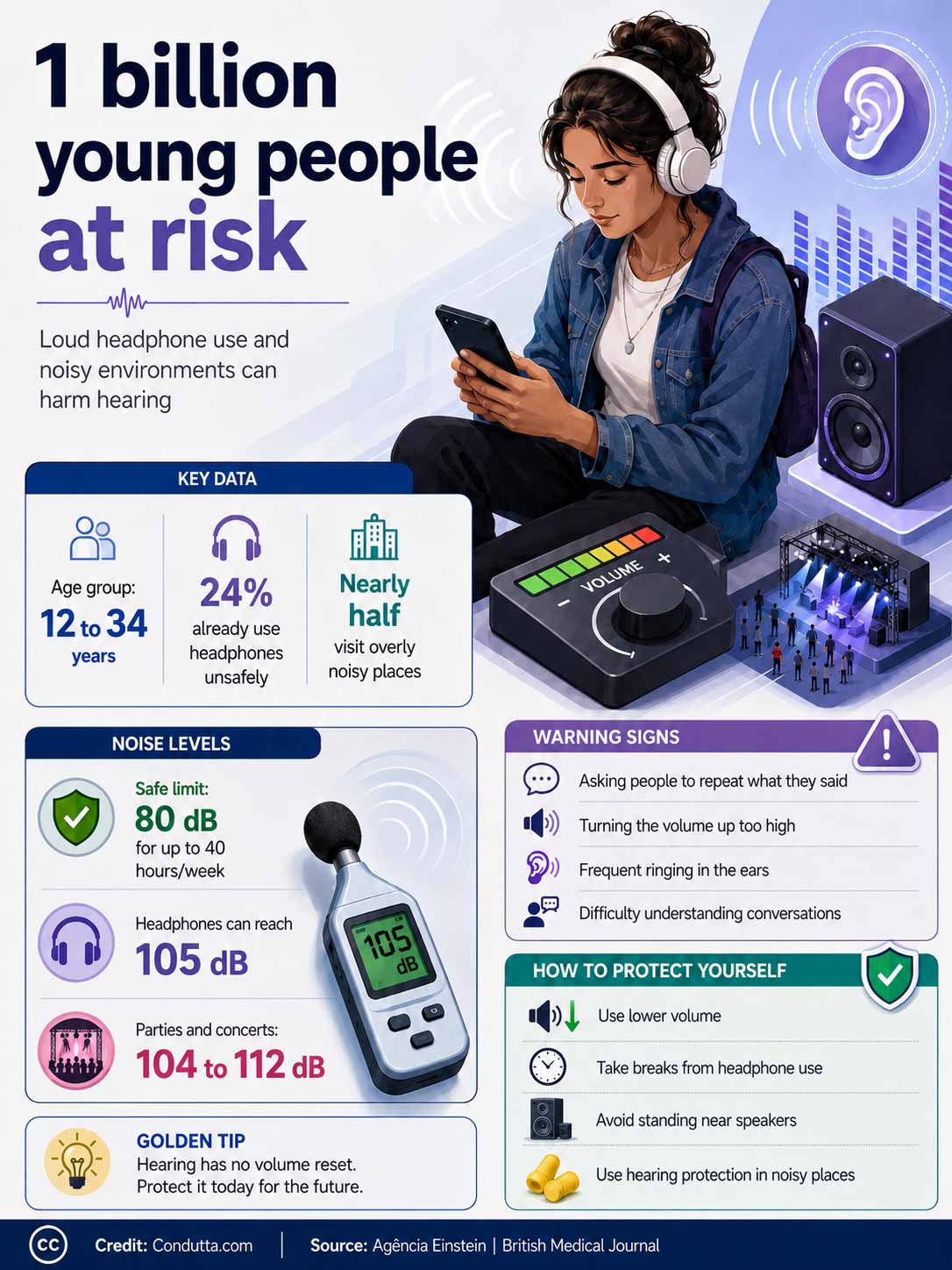
Source: Agência Einstein | British Medical Journal. Infographic: Condutta.com