Present in many kitchens, olive oil is valued for its fats considered beneficial and can be part of a balanced diet when consumed in moderation.
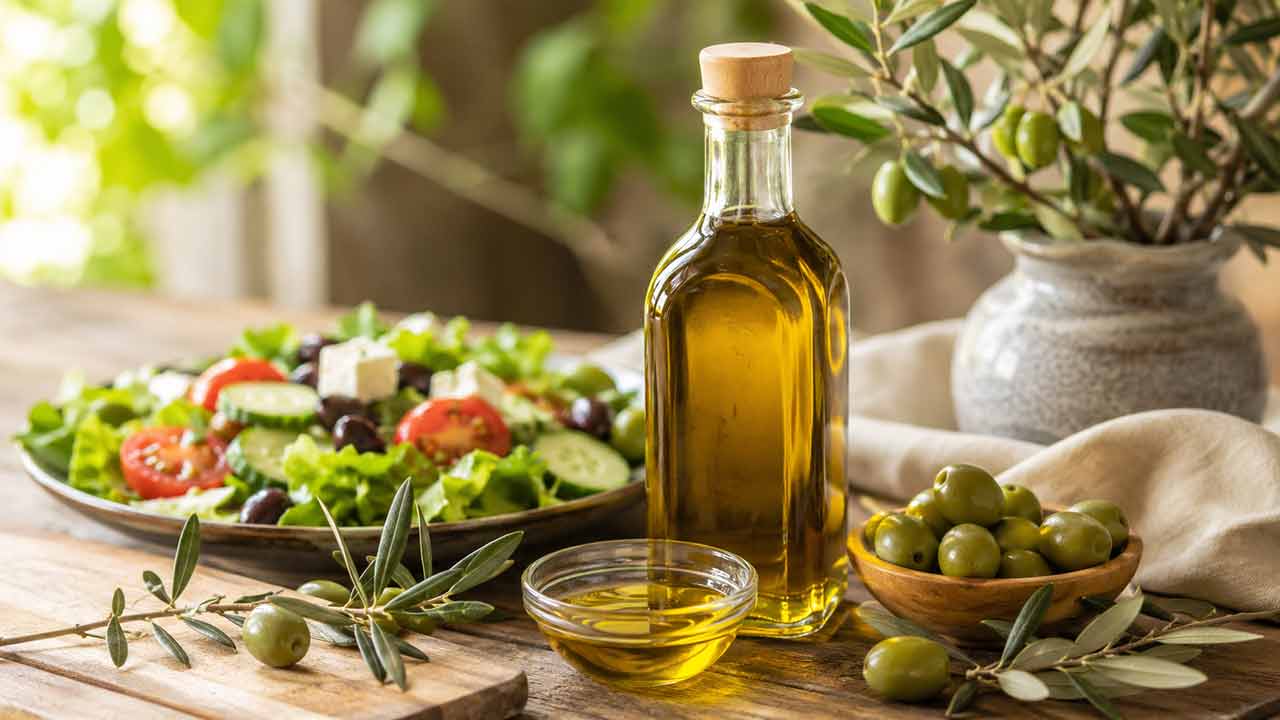
Olive oil is one of the most popular ingredients in the routine of those seeking a more balanced diet. Used to dress salads, finish dishes or prepare hot recipes, it is often associated with the Mediterranean diet, an eating pattern known for the consumption of vegetables, fruits, whole grains, fish, lean meats and good sources of fat.
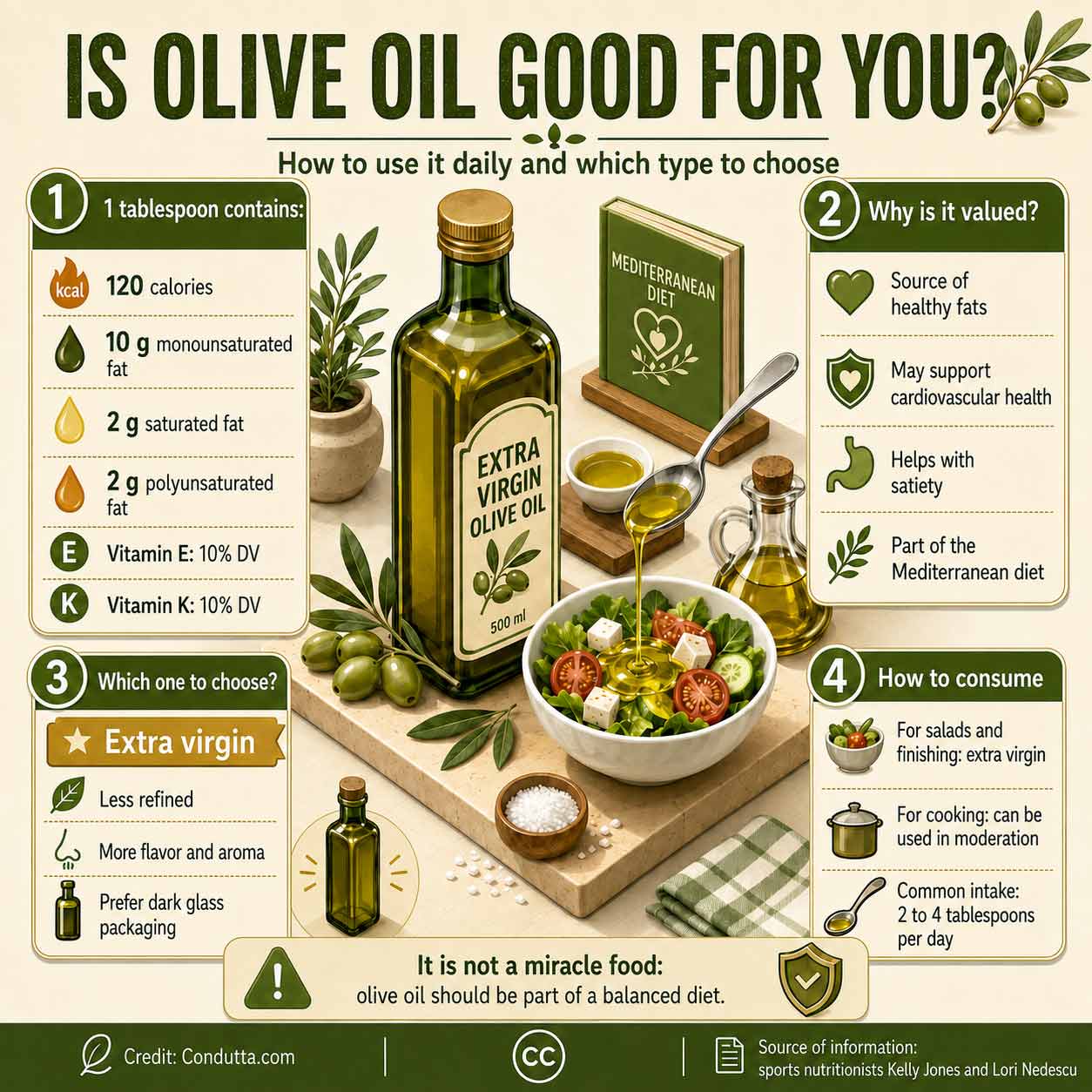
Although it is a source of fat, olive oil can be an interesting option within a varied menu. According to sports nutritionists Kelly Jones and Lori Nedescu, the ingredient stands out mainly for its monounsaturated fats, as well as vitamin E and vitamin K.
One tablespoon of extra virgin olive oil contains about 120 calories, 10 grams of monounsaturated fat, 2 grams of saturated fat, 2 grams of polyunsaturated fat, as well as small amounts of vitamin E and vitamin K.
Monounsaturated fats are often associated with cardiovascular health care. Vitamin E acts as an antioxidant, while vitamin K participates in important processes in the body. For people who exercise, balanced consumption of good fats can also contribute to a more complete diet and to a feeling of satiety throughout the day.
According to Lori Nedescu, the Mediterranean diet can include up to four tablespoons of olive oil per day. Even so, the specialists emphasize that consumption should be part of a balanced dietary pattern, with preference given to natural and varied foods, such as fish, nuts, vegetables, fruits and whole grains.
When choosing, extra virgin olive oil is often pointed out as the best option for cold use, such as in salads and finishing dishes. It is less refined, preserves more natural characteristics and generally has a more pronounced flavor, as well as a more intense color.
Another important point is to look at the packaging. Glass bottles, especially darker ones, help protect the product from light and may help maintain its quality for longer. It is also recommended to store olive oil in a cool place, away from excessive heat.
Regarding use in hot preparations, the nutritionists explain that olive oil can be used in cooking, as long as it is not overused and very high temperatures are avoided for long periods. For cooking, a virgin or pure option may be enough. For seasoning foods without heating, extra virgin remains the most recommended choice.
In summary, olive oil can be an ally in everyday eating, as long as it is used with balance. It should not be treated as a miracle solution, but as part of a healthy, varied routine guided by each person’s individual needs.
For those with dietary restrictions, specific health conditions or questions about the ideal amount, the recommendation is to seek guidance from a doctor or nutritionist.