There are few things more inviting than a sunny day: warmth, beach, pool, and that unmistakable sense of well-being.
However, excessive exposure to ultraviolet (UV) rays can turn pleasure into a problem — and in more severe cases, progress to what is commonly referred to as sun poisoning.
Although the term is not officially recognized as a medical diagnosis, it is widely used to describe cases of severe sunburn accompanied by symptoms that go beyond redness and skin pain.
+ 5 Facts About the Ovaries Every Woman Should Know
+ Death of Eric Dane, Star of “Grey’s Anatomy” and “Euphoria,” at 53
What Is Sun Poisoning?
According to dermatologist Erum Ilyas, MD, of Montgomery Dermatology, “sun poisoning” is a common way patients describe a serious UV radiation burn associated with systemic symptoms.
The skin plays an important role in regulating body temperature. When the body overheats due to prolonged sun exposure, this ability becomes impaired. This can increase the risk of heatstroke or heat exhaustion, with symptoms such as:
- intense thirst
- nausea
- dizziness
- headache
- dehydration
- vomiting
- confusion
- rapid heartbeat
- rapid breathing
According to Marisa Garshick, MD, clinical assistant professor at Cornell, signs such as fever, chills, and shortness of breath associated with a sunburn are warning signals that the condition may be more serious.
What Are the Symptoms of Sun Poisoning?
In addition to the typical pain, warm skin, tenderness, and irritation of a sunburn, sun poisoning often includes:
- fever
- nausea
- dizziness or feeling faint
- shortness of breath
- general malaise
- chills
What Does Sun Poisoning Look Like?
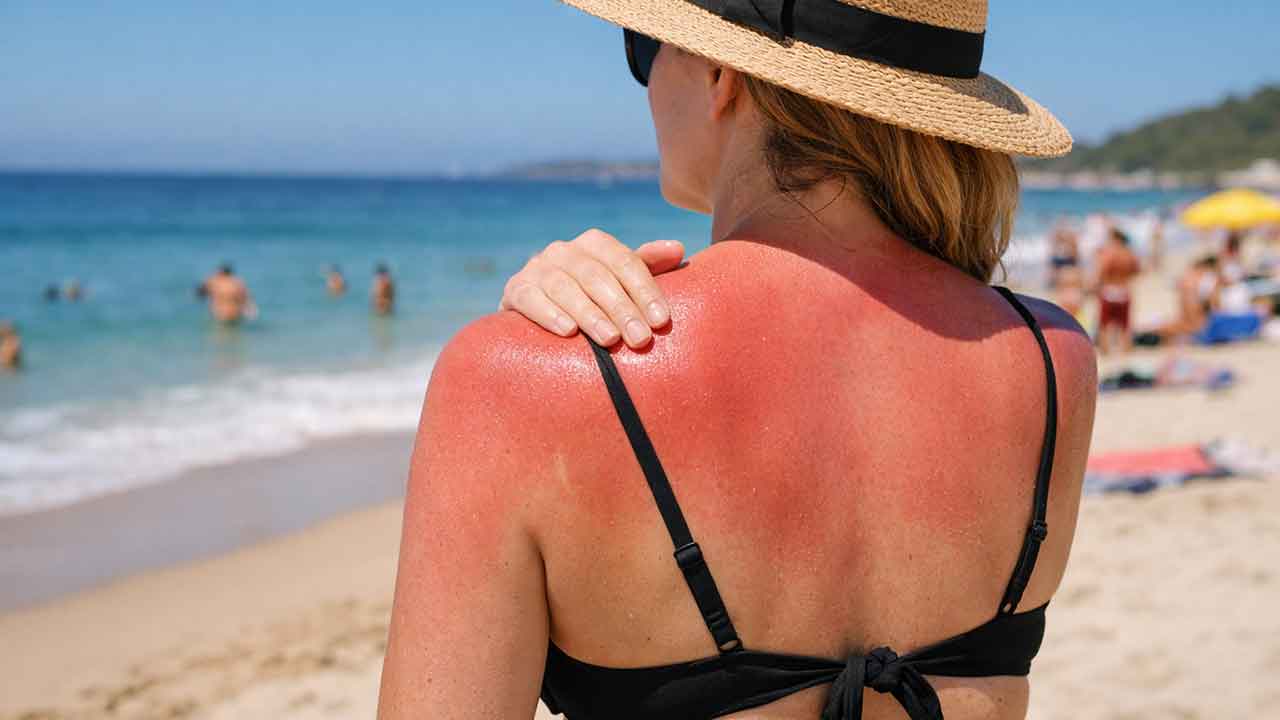
Visually, it resembles a very intense sunburn. As Dr. Garshick explains, it may involve:
- pronounced redness
- blisters
- significant peeling
- swelling resembling a skin rash
Blisters
The appearance of blisters usually indicates a deeper burn. If they occur along with fever, nausea, or chills, seek medical evaluation.
How Do You Get Sun Poisoning?
Sun poisoning can occur after spending a significant amount of time exposed to the sun. However, the amount of time varies because some individuals are more sensitive to UV rays, such as those with fair skin and lower levels of melanin.
Dr. Ilyas also warns that certain medications can increase sun sensitivity (photosensitizing medications), including:
- some oral contraceptives
- certain blood pressure medications
- acne and anti-aging treatments such as retinol
If in doubt, speak with your doctor to determine whether any medication you are taking requires extra sun precautions.
Pregnancy can also increase sensitivity. According to Dr. Ilyas, hormonal changes during this period may raise the risk of burns and pigmentation changes, as well as affect core body temperature.
Another important point: sun poisoning can happen even if you do not feel hot. Dr. Ilyas notes that skiers can suffer burns in subzero temperatures because UV rays remain strong and are intensified by reflection from snow.
What Does Treatment for Sun Poisoning Involve?
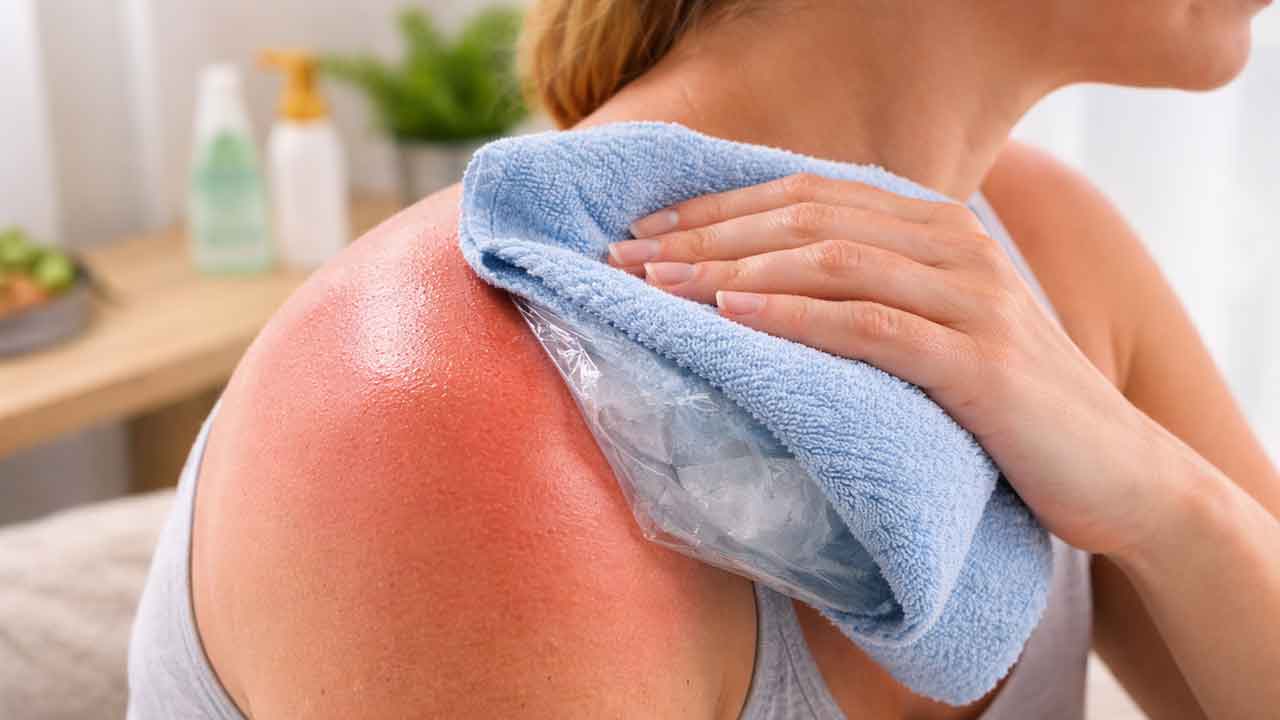
For suspected cases, Dr. Garshick recommends:
- avoiding further sun exposure
- drinking plenty of fluids
- applying cool compresses
- using pain relievers/anti-inflammatories such as aspirin or ibuprofen, when appropriate
In more severe situations, medical treatment may be required, including:
- intravenous fluids for dehydration
- electrolytes for imbalance
- antibiotics, if there are open areas at risk of infection
Dr. Ilyas emphasizes: if there is fever, chills, severe nausea, or intense malaise, it is essential to seek medical care. The body’s response to a severe burn can extend beyond the skin and affect other organs.
How to Prevent Sun Poisoning?
To reduce the risk, Dr. Garshick recommends:
- using broad-spectrum sunscreen (UVA and UVB)
- choosing SPF 30 or higher
- reapplying every two hours
Dr. Ilyas also suggests selecting sunscreens that contain zinc oxide and titanium dioxide, which act as physical blockers and provide immediate protection (unlike some chemical filters, which take longer to become effective).
Other important measures:
- wear sunscreen even on cold or cloudy days
- choose UV-protective clothing (indicated on the label)
- wear UV-protective sunglasses and hats
- opt for a wide-brim hat (ideally 6 inches around)
With these precautions, you can enjoy the sun more safely and avoid turning a perfect day into pain, dehydration, and complications.